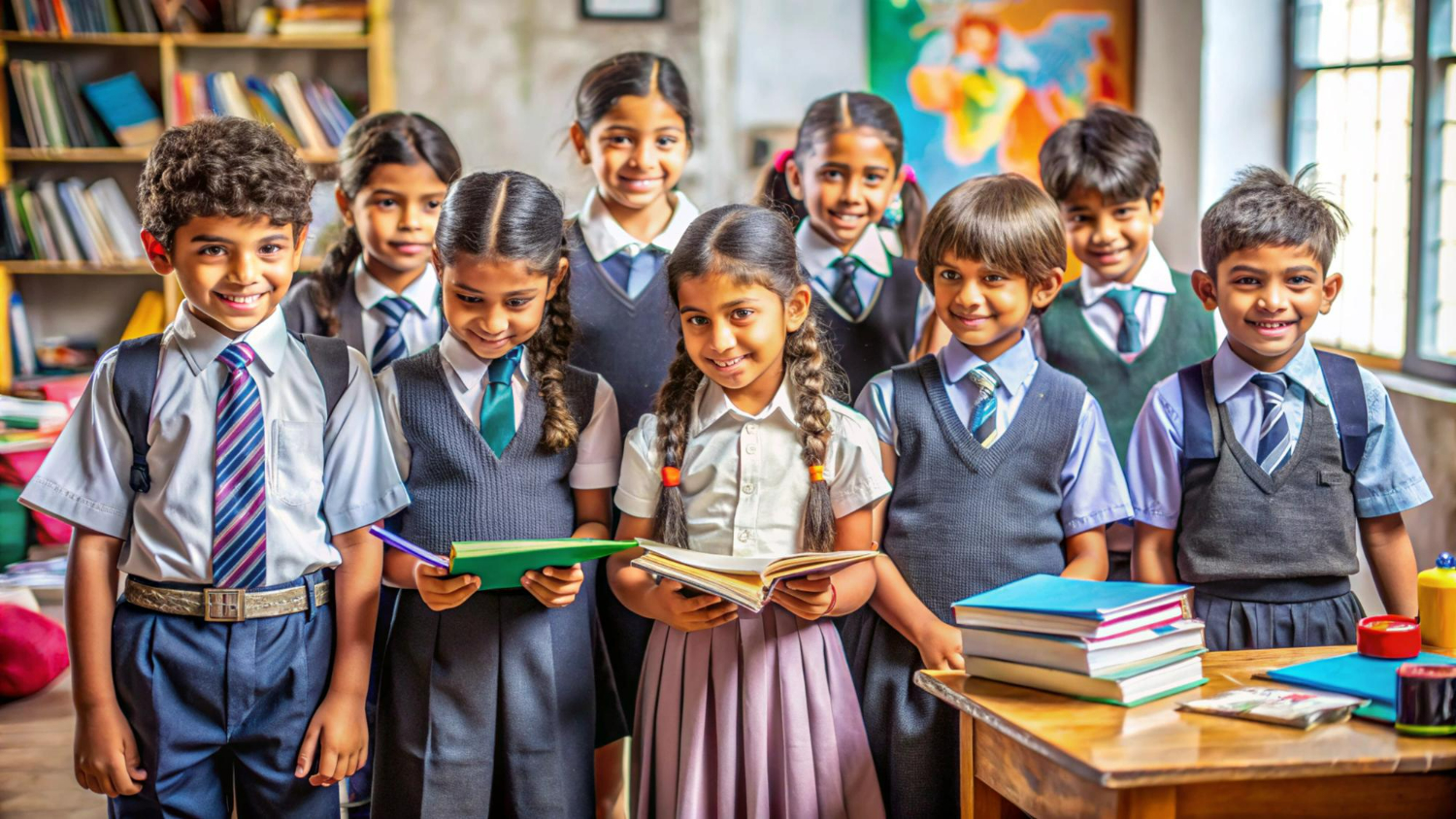
Nobody understands the loss of attention span than a parent in a digitally-forward world today! Instagram reels are for 15 to 90 seconds; YouTube has shorts and your child grasps a new idea or concept within 15 seconds and keeps scrolling to ingest new content. It feels like reading slowly, grasping words and ideas and learning through reading have all become yesteryear concepts!
But before we dismiss the reading culture as passé, let us evaluate psychological, scientific and cognitive effects of reading habits on children. Our article highlights the importance of reading culture in schools and suggests ways in which teachers and mentors can inculcate this lovely habit in tiny toddlers to improve their overall physical, mental and emotional well-being.
How Reading Rewires the Brain
When we speak about the reading habits children develop, we are not speaking of a hobby, but about literal brain development—neural pathways being reshaped. Unlike speech, which is biologically hardwired into humans, reading is a relatively “new” invention in our evolutionary history. To read, the brain must marshal various regions—the visual cortex to see the letters, the temporal lobe to process the sounds, and the frontal lobe for meaning and logic.
Neuroplasticity is the brain’s ability to strengthen itself through usage. When schools cultivate regular reading practice, children demonstrate increased integrity in “white matter,” which allows different parts of the brain to communicate effectively with each other. This deep, rich experience inside a book involves “deep reading,” where one internalises sophisticated stories and relates that to personal experiences. This is the polar opposite of the “skimming” or “scrolling” behaviour one would get with social media, training the brain for quick hits of dopamine and not the more rewarding, longer-term intellectual satisfaction.
Slowing Down and Reducing Anxiety
We are living in the speed-of-anxiety generation. Kids today are peppered with notifications, pings, and the need to gratify on demand. It puts the nervous system in a state of “high alert.” It’s one of the most beautiful things that can come out of the reading practices the children can develop in a nurturing school setting, and that is the ability to slow down.
What happens is called “bibliotherapy.” When children start to read, their heart rates decrease, along with the tension in their muscles. Researchers say that only six minutes of straight reading will lower stress levels by 68%. “The monkey mind,” the part of the brain that swings from one thought to the next so quickly—and so worries so much—it is silenced. All this happens because the children stay focused on just one story.
Paper vs. Pixels: Why the Physical Page Still Reigns Supreme
In the zeal to achieve “smart classrooms,” the “hard copy” book has been forgotten. Even as the ability to read “smart” books is vital, the reading habits children should inculcate through paper have certain irreplaceable values of their own. It has been proven time and again that “spatial memory” has an immensely large part to play in the process of comprehension. When you read through a hard copy book, your brain organises the information on the basis of where it is on the page and your proximity to the physical pile of paper you are reading through.
Digital reading may be linked to multi-tasking. A child reading with an electronic device is only one swipe away from a game or a video. As such, extreme concentration is not possible for the child. Moreover, the effects of blue light emitted from devices can impair melatonin secretion in children. Melatonin secretion is an integral part of a child’s emotional regulation. For true cognitive depth, schools must champion the physical library, ensuring that the reading habits children build are grounded in the sensory experience of turning pages, the smell of old paper, and the absence of digital distractions.
Navigating the ADHD Challenge
The rise in ADHD (Attention Deficit Hyperactivity Disorder) diagnoses is a growing concern for parents and educators alike. While ADHD is a complex neurodevelopmental condition, the modern digital environment often exacerbates its symptoms. This is where the reading habits children develop can serve as a powerful tool for focus-training.
Rather than viewing a child with ADHD as “unable to read,” schools should use reading as a gradual “focus-building” exercise. It starts with shorter, high-interest graphic novels or interactive stories that provide visual support. By slowly increasing the length of the reading sessions, teachers help students build “attentional stamina.” When a school prioritises a reading culture, it gives a child with ADHD a structured environment to practise staying with one thought at a time, which is perhaps the most vital life skill they can acquire in the 21st century.
Building the "Human" Connection: Empathy and Social Awareness
Just as Social Emotional Learning teaches us to step into another’s shoes, reading is the ultimate empathy machine. When schools encourage reading habits children are exposed to lives, cultures, and struggles vastly different from their own. A child in a city classroom can experience the life of a refugee, a historical figure, or a person living with a disability through a well-written novel.
This exposure breaks down the “otherness” that often leads to bullying or social isolation. By discussing books in a classroom setting, students learn to debate ideas respectfully, understand diverse perspectives, and realise that their own internal struggles are often universal. The reading habits children maintain into their teenage years act as a bridge between their personal identity and the global community.
Practical Ways Schools Can Inculcate Reading Culture
How do we translate that into practice? For reading habits in children to be really set in place, the school environment must reflect the importance of the book.
DEAR Time: In-school sessions where teachers and students read together under the “Drop Everything and Read” policy.
Reading Lounges: Creating non-academic settings that are cosy, in which one would not have to take an exam but simply to read a story.
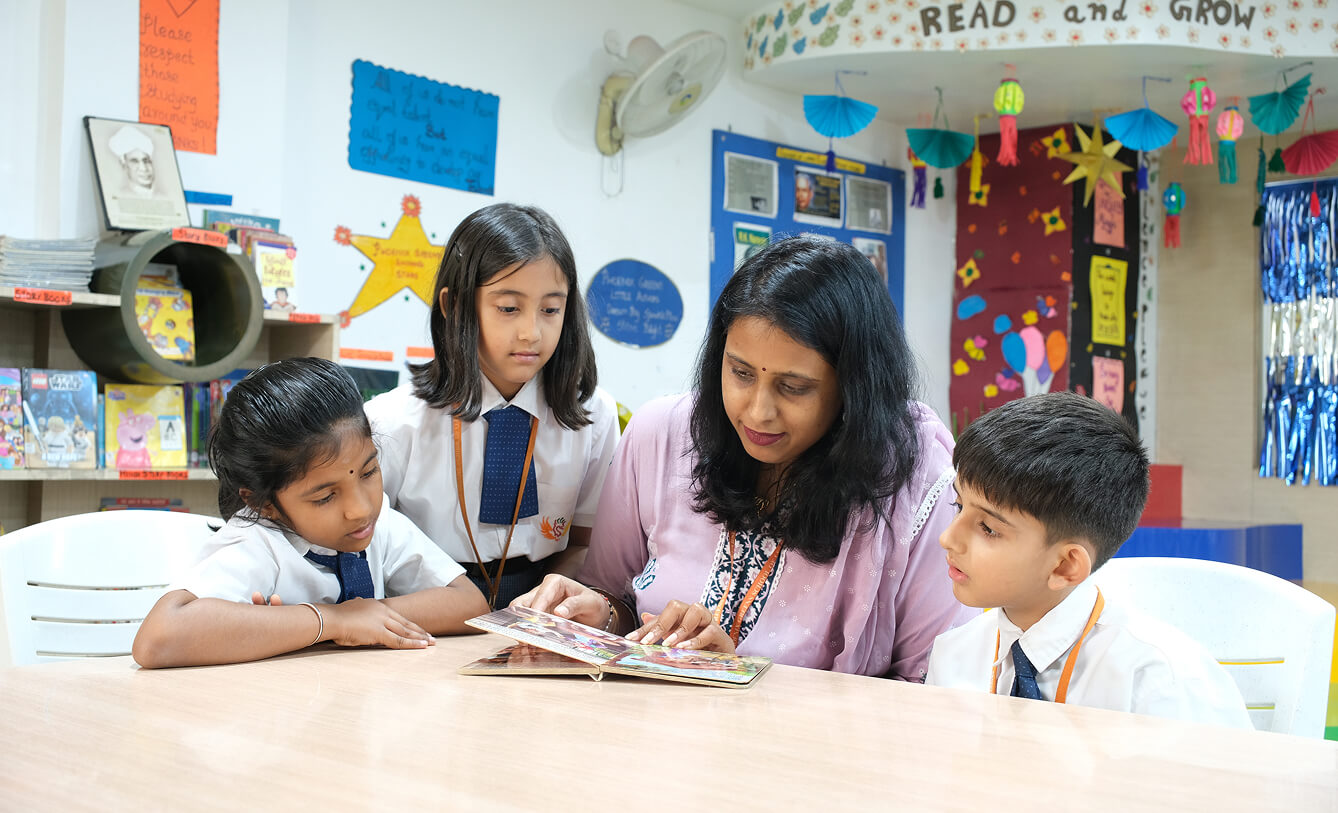
Teacher Modelling: Just like with SEL, if a child witnesses their mentor genuinely excited about a book, they’re far more likely to behave similarly.
Peer Book Clubs: This allows students to take the centre of discussion on books that interest them while also giving them a sense of agency over their own learning.
Ultimately, the reading habits children develop today will determine the quality of their internal lives tomorrow. We must ensure they have the tools to look beyond the 15-second scroll and find the depth that only a book can provide.
Takeaway
Inculcating reading habits in children has unlimited benefits as mentioned in the article. It is the greatest strategy to shift their interest from mindless scrolling to indulging in a conscious leisure activity. From helping them slow down, gain clarity in thinking to improving their creativity, this habit helps build better individuals to say the least.
If you are a doting parent striving to nurture your children to become a conscious, empathetic and evolved individual, start inculcating reading habits in children at the earliest. Choose schools that believe in nurturing the students by inculcating reading habits in children. A small step you take today will help build a bright future ahead, provided you yourself are not sinking under any digital addiction that prevents you from turning the pages of a book.
At Phoenix Greens School of Learning, we believe in creating a safe space for your child to grow intellectual, emotionally and cognitively. Visit us to partake in a fruitful journey of unhinged education, unparalleled infrastructure and world-class curriculum for you and your child.