IGCSE School Hyderabad
IGCSE in Hyderabad
Results, University Pathways and What Parents Should Expect
A parent I spoke with recently put it plainly: she had spent three months researching IGCSE schools in Hyderabad and still was not sure what her daughter would actually have in her hands at the end of Class 10. A certificate, yes — but what did the grades mean, where would they be recognised, and what came next?
Those are the right questions. And they are the ones this guide is built around — not curriculum structure, but outcomes. What IGCSE results actually look like, where they take students, and how to judge an IGCSE school in Hyderabad beyond what the brochure tells you.
How IGCSE Assessment and Grading Work
IGCSE, the International General Certificate of Secondary Education administered by Cambridge Assessment International Education, is typically completed between the ages of 14 and 16 — broadly equivalent to Classes 9 and 10 in the Indian system. Students sit examinations in a range of subjects, usually between five and ten, with grades awarded on a scale from A* through G, with U indicating ungraded.
The grading system is criterion-referenced, meaning a student’s grade reflects what they have demonstrated against fixed standards — not how they performed relative to other students in their batch. An A* in Mathematics from an IGCSE school in Hyderabad means the same thing as an A* from a school in London or Singapore. That international consistency is one of the qualification’s genuine strengths and a significant part of why universities abroad recognise it readily.
Assessment is primarily through external examinations set and marked by Cambridge, with some subjects including a coursework or practical component. There are no internal board exams in the CBSE sense — the results your child receives come directly from Cambridge.
What Happens After IGCSE: The Three Pathways
This is where families in Hyderabad often need the clearest guidance, because the post-IGCSE decision is not automatic.
- Cambridge A Level or AS Level — the natural continuation within the Cambridge pathway. Students who complete IGCSE and perform well have a strong foundation for A Level study, which is widely recognised by universities in the UK, US, Canada, Australia, Singapore, and increasingly by Indian universities for undergraduate admission.
- International Baccalaureate Diploma Programme (IBDP) — an alternative senior secondary route that some international schools in Hyderabad offer after IGCSE. The IBDP is a two-year programme with strong global university recognition and suits students looking for a broad, interdisciplinary senior secondary experience.
- Class 11 CBSE or ISC — students who complete IGCSE and wish to pursue JEE, NEET, or domestic university admissions through CUET can transition into Class 11 CBSE or ISC. The transition is manageable, particularly for students with strong IGCSE results in the relevant sciences or commerce subjects. The best international schools in Hyderabad that offer IGCSE will advise families on this pathway clearly rather than leaving it as an afterthought.
Understanding the after IGCSE options in India is essential before choosing the pathway — particularly for families who are undecided between international university aspirations and domestic competitive exam routes.
University Recognition in India and Abroad
IGCSE results are recognised by the Association of Indian Universities (AIU), which means they are valid for undergraduate admission at Indian universities. For JEE and NEET eligibility specifically, students must also meet the Physics, Chemistry, and Mathematics or Biology requirements at the equivalent of Class 12 level — which is why the post-IGCSE pathway matters significantly for families keeping those options open.
Internationally, IGCSE is recognised at face value by universities across the UK, US, Canada, Australia, and most of Southeast Asia. Strong A* to B results across five or more subjects form the foundation of a competitive international application profile.
IGCSE vs CBSE at Class 10: What the Comparison Actually Comes Down To?
The IGCSE vs CBSE Class 10 question is ultimately about what comes after. CBSE at Class 10 feeds naturally into Class 11 CBSE and the JEE or NEET pathway. IGCSE feeds naturally into A Level or IBDP and international university admission. Both are rigorous. The difference is directional — and families who are clear about their child’s likely post-secondary path will find the choice considerably easier than those who treat it as a general quality question.
Judging an IGCSE School in Hyderabad
When evaluating IGCSE results from any school, ask for subject-wise grade distributions — specifically the percentage of students achieving A* to B — rather than overall pass rates. Ask how many students have transitioned successfully to A Level, IBDP, or Class 11 CBSE in recent cohorts, and where they are now. The best international schools in Hyderabad will answer these questions directly.
Frequently Asked Questions
What do IGCSE results mean and how are they graded?
IGCSE grades run from A* (highest) through G, awarded by Cambridge against fixed international standards. They are not curved relative to other students — an A* reflects a consistent level of demonstrated ability regardless of where in the world the exam was taken.
What are the options after IGCSE in India?
The main pathways are Cambridge A Level, the IBDP, or a transition into Class 11 CBSE or ISC. The right choice depends on whether a student is targeting Indian competitive exams, domestic university admission through CUET, or international universities. A good IGCSE school in Hyderabad will help families map this clearly before Class 9.
Is IGCSE recognised by Indian universities?
Yes. IGCSE is recognised by the Association of Indian Universities. For JEE and NEET eligibility, students will also need to complete the equivalent of Class 12 in the relevant subjects — which is why the post-IGCSE pathway choice matters.
How does IGCSE compare to CBSE at Class 10?
Both are rigorous at Class 10 level. IGCSE uses external Cambridge assessment and criterion-referenced grading; CBSE uses its own board examinations. The more meaningful difference is directional: CBSE feeds naturally into domestic competitive exam pathways; IGCSE feeds naturally into international senior secondary and university routes.
How do I judge whether an IGCSE school in Hyderabad has strong results?
Ask for subject-wise grade distributions showing A* to B percentages across recent cohorts, and ask where students have gone after completing IGCSE. Pass rates alone are an unreliable indicator of genuine academic strength.

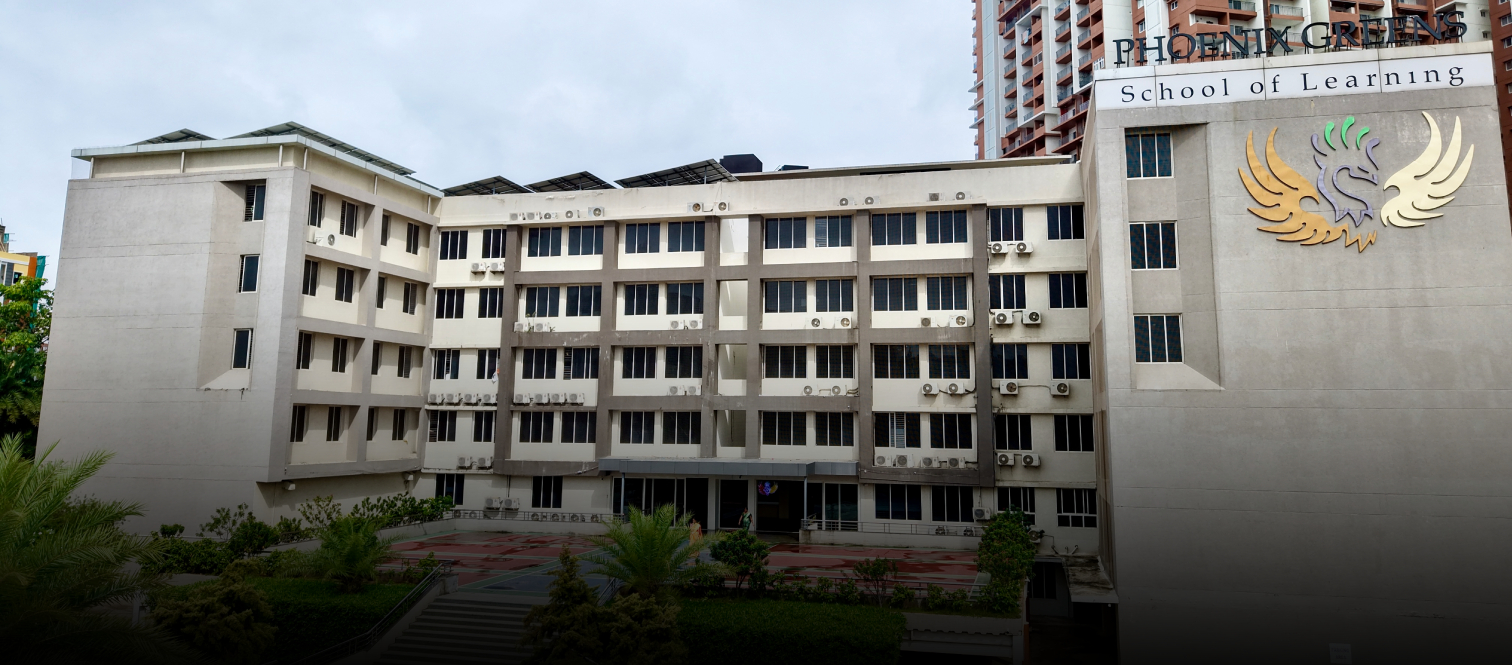
Phoenix Greens School of Learning
At Phoenix Greens School of Learning, the Cambridge pathway is built around clear outcomes — rigorous IGCSE preparation, transparent results, and structured guidance on what comes next. To explore the Cambridge pathway at Phoenix Greens and speak with our admissions team, we invite you to get in touch.