CBSE vs Cambridge Curriculum: Which Is Better for Your Child?
Children pick up skills and knowledge in their own special ways. While some people develop in environments that encourage participation and openness, others prefer rules and routines. A child’s learning, thinking, and future readiness are all greatly affected by the curriculum.
Nowadays, parents frequently compare the CBSE curriculum to the Cambridge curriculum. Both are reputable educational systems, but using entirely different teaching strategies. This guide simplifies the differences to help parents make an informed and confident decision.
Different Children Need Different Kinds of Schools
The main objectives of schooling used to be finishing the curriculum and performing well in exams. Today, parents look beyond marks. They want schools that support emotional growth, creativity, and life skills.
A curriculum should:
Support a child’s natural learning style.
Balance academics and well-being.
Prepare students for future education paths.
Build confidence and curiosity.
Understanding CBSE vs Cambridge curriculum becomes important when these goals are kept in mind.
Gaining Understanding about CBSE
One of the most popular boards in India is the Central Board of Secondary Education (CBSE). It offers a structured and standardised academic framework.
Important features of CBSE include:
A nationally uniform syllabus.
NCERT textbooks.
Fixed academic guidelines.
Strong alignment with Indian entrance exams.
In the CBSE vs Cambridge curriculum comparison, CBSE tends to be chosen due to its solid academic background and solid reputation.
Understanding the Cambridge System
The Cambridge curriculum is developed by Cambridge Assessment International Education in the UK. It is followed in international schools across many countries.
Key characteristics include:
International academic standards.
Flexible subject choices.
Emphasis on understanding concepts.
Regular syllabus updates.
When discussing CBSE vs Cambridge curriculum, Cambridge is usually linked with global exposure and modern learning methods.
Daily Classroom Experience
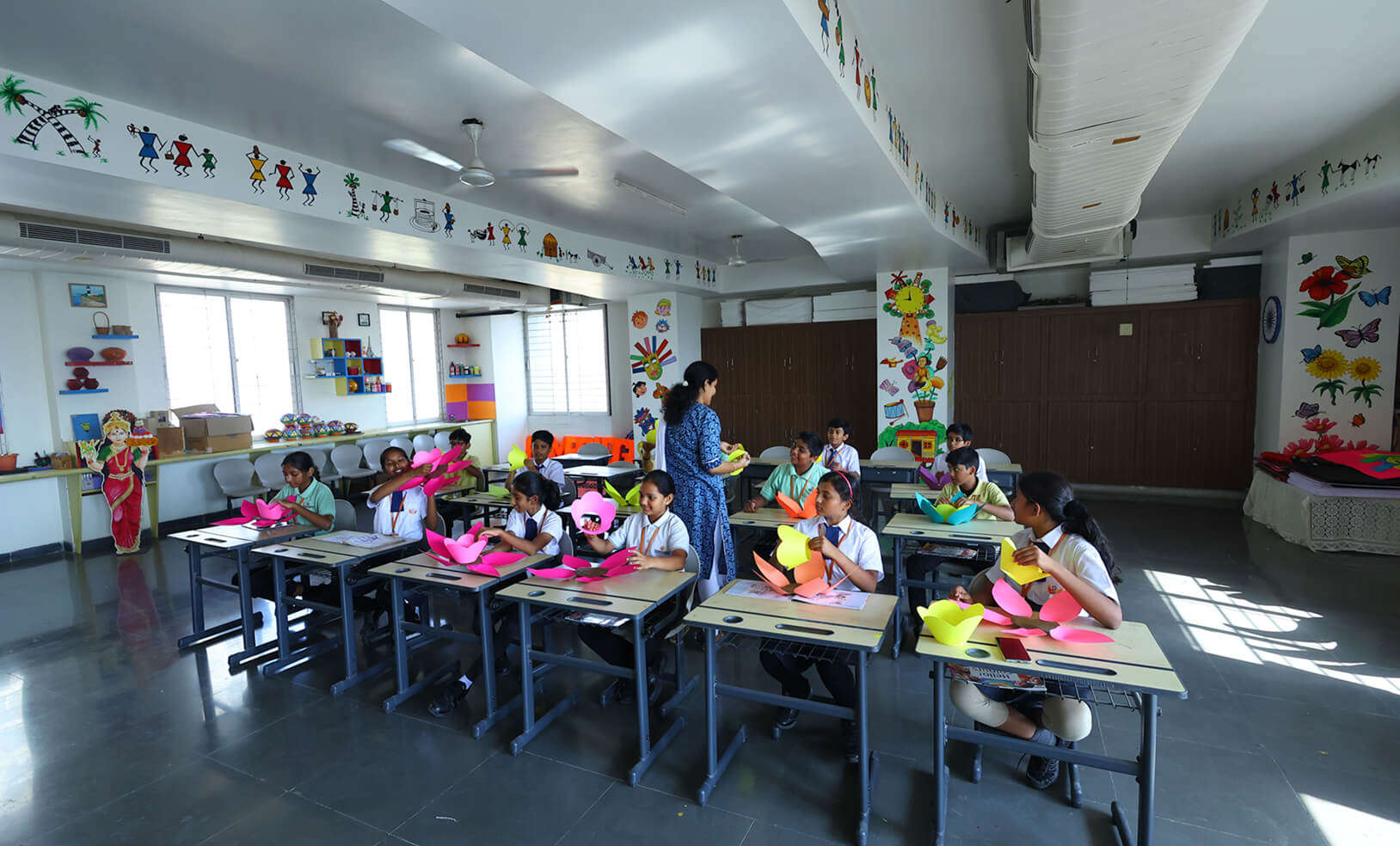
Daily classroom activities shape a child’s attitude towards learning. This covers how classes are delivered, how students engage with teachers and other students, and how easily they ask questions and exchange ideas.
Learning Environment in CBSE Classrooms
CBSE classrooms usually follow a structured approach. Textbooks and set lesson plans, helped by regular writing practice, are used by teachers to guide their classes. For children who enjoy routine, specific directions, and a predictable learning style, this approach is effective.
Learning Environment in Cambridge Classrooms
Cambridge classrooms focus on active participation and interaction. Lessons often include open-ended questions, group discussions, project work, and independent research. Students actively participate in their classes. In the CBSE vs Cambridge curriculum comparison, Cambridge classrooms are usually more student-driven and exploratory.
How Learning Content Is Designed?
The curriculum’s objectives and the students’ ages are taken into consideration when creating learning materials. It determines what subjects are taught, how clearly ideas are explained, and how lessons connect to real-life situations. Instead of having students memorise facts, well-designed content helps them understand concepts clearly.
Curriculum Design for CBSE : An organised syllabus is followed by CBSE.
Key aspects:
Same content across all CBSE schools.
Strong focus on Maths and Science.
Limited flexibility in subject selection.
Predictable academic progression.
This design helps students who may shift between cities within India.
This flexibility stands out in the CBSE vs Cambridge curriculum comparison.
How Students Are Assessed?
Student assessment shows how well a child understands what is taught in class. It may include written exams, projects, class participation, and practical work. A balanced assessment system helps identify strengths and areas for improvement without causing unnecessary stress.
Assessment Pattern in CBSE CBSE mainly uses marks-based evaluation.
Assessment style includes:
Periodic tests.
Term-end exams.
Board exams in higher classes.
Focus on written answers.
Students who feel confident during exams usually do well in this system.
Assessment Pattern in Cambridge Cambridge uses varied assessment methods.
Assessment style includes:
Written exams.
Projects and coursework.
Application-based questions.
Grade-based results.
In CBSE vs Cambridge curriculum, Cambridge assessment feels more balanced and less exam-heavy.
Academic Stress and the Welfare of Students
Academic pressure affects a child’s motivation, self-esteem, and mental health. Stress can result from hard workloads and frequent exams if they are not effectively controlled. A supportive school environment helps students stay emotionally balanced and focused.
CBSE Pressure Levels
CBSE becomes increasingly challenging, particularly in upper grades. Large syllabuses, strong competition, and entrance exam preparation are common challenges for students. Under this organised pressure, some kids do well, while others could experience anxiety or tension.
Pressure Levels in Cambridge
The learning process at Cambridge is typically more consistent. Students are regularly assessed, with a focus on topic understanding rather than rankings. This method promotes emotional health and lessens stress. When comparing the curriculum of the CBSE and Cambridge, Cambridge is frequently thought to be more student-friendly.
Improvement in Thinking Abilities
Students with strong thinking abilities are better able to examine data and find solutions. Focusing on these abilities builds independent thinking, creativity, and logical reasoning.
These skills are especially useful for competitive exams in India.
Thinking Skills Encouraged by Cambridge Cambridge focuses on broader thinking abilities.
Skills developed include:
Critical analysis.
Problem-solving.
Independent judgement.
Creativity.
In the CBSE vs Cambridge curriculum debate, Cambridge is often preferred for holistic development.
Language Learning and Expression
Language learning supports a child’s ability to read, write, speak, and understand ideas clearly. Strong expression skills help students share their thoughts with confidence in both academic and real-life situations.
Language Approach in CBSE CBSE focuses on language fundamentals.
Main focus areas:
Grammar and writing.
Literature understanding.
Understanding what you read.
Spoken communication depends largely on school initiatives.
Language Approach in Cambridge Cambridge gives importance to expression.
Main focus areas:
Speaking and listening skills.
Presentations.
Structured discussions.
This makes Cambridge stronger in communication within the CBSE vs Cambridge curriculum comparison.
Preparation for Future Education
Getting prepared for future education helps students build the skills and knowledge needed for higher studies. A well-planned curriculum supports smooth transitions to college, university, or international education pathways.
CBSE and Indian Higher Education Some of the benefits are:
Familiar exam pattern.
Direct preparation for NEET and JEE.
Widely accepted across India.
For families planning local higher education, CBSE fits well in CBSE vs Cambridge curriculum.
Cambridge and Global Universities Cambridge supports international education goals.
Benefits consist of:
Global recognition.
Accepted by universities worldwide.
Smooth transition to foreign education systems.
This makes Cambridge attractive for families considering overseas studies.
Cost and Accessibility
Cost and accessibility determine how easily families can choose and continue with a curriculum. Factors such as school fees, location, and availability play an important role in long-term planning.
Financial Aspect of CBSE CBSE schools are more affordable.
Benefits include:
Lower school fees.
Availability in smaller towns.
Wide school network.
This affordability is a major strength in the CBSE vs Cambridge curriculum discussion.
Financial Aspect of Cambridge Cambridge schools are usually costlier.
Considerations include:
Higher tuition fees.
Mostly urban locations.
Additional costs for activities.
Parents should consider long-term affordability when choosing in CBSE vs Cambridge curriculum.
Role of Parents in Academic Life
Parents play an important role in supporting a child’s learning journey. Their involvement helps guide study habits, motivation, and overall academic confidence.
Parental Involvement in CBSE CBSE often requires close parental support.
Parents may need to:
Monitor homework.
Assist with exam preparation.
Arrange extra coaching if needed.
This involvement increases as academic pressure rises.
Parental Involvement in Cambridge Cambridge encourages guided independence.
Parents usually:
Support project work.
Encourage reading and research.
Act as mentors rather than supervisors.
In CBSE vs Cambridge curriculum, Cambridge promotes early responsibility.
Which Curriculum Matches Your Child Best?
The right curriculum depends on your child’s learning style, interests, and future goals. Understanding their strengths and comfort level helps parents make the best choice.
CBSE May Be Suitable If Your Child:
Likes structure and routine.
Performs well in exams.
Plans to study in India.
Feels comfortable with competition.
Cambridge May Be Suitable If Your Child:
Enjoys exploration and discussion.
Learns through activities.
Needs flexible pacing.
Has international study plans.
Concluding Remarks for Parents
There is no right answer when deciding between the CBSE and Cambridge curriculum because both are successful when used with the right child. While CBSE offers structure, affordability, and efficient exam preparation, Cambridge offers freedom, global exposure, and skill-based education. Parents should choose the curriculum that best fits their child’s interests, confidence, and long-term goals.
Grow independently in a nurturing environment that provides the finest CBSE and Cambridge education at Phoenix Greens School of Learning.
Contact us right now to find out more about our curriculum!